Colorado prohibits open alcohol and marijuana containers in the passenger area of a vehicle on a public highway, and public drinking is generally restricted outside licensed or authorized areas, with rules that vary by city. If an arrest involves alcohol, the DMV acts separately from the court, and you have only 7 calendar days to request a hearing.
TL;DR:
- Colorado’s vehicle exceptions cover for hire vehicles, motor home living quarters, locked trunks, and space behind the last upright seat in vehicles without trunks.
- A back seat or footwell does not qualify as an unoccupied area, and outdoor drinking is lawful only inside locally authorized boundaries.
- Colorado sets DUI at 0.08% blood alcohol content and DWAI at 0.05%, but impairment varies, and charges may occur below either threshold.
- The DMV process runs separately from criminal court; request an Express Consent Hearing within 7 calendar days after receiving the notice or forfeit that hearing.
Table of Contents
- What Colorado law says about open containers
- Where the rules apply: vehicles, public places, and local exceptions
- Penalties and how open container ties into DUI, DWAI, and DMV action
- If you get cited or arrested: your first steps
- How to transport alcohol and marijuana without a ticket
- Why timing and a coordinated defense matter
- How we help with open-container tickets, DUI, and license issues
- FAQ
- Sources
What Colorado law says about open containers
Two statutes control. Section 42-4-1305 covers open alcoholic beverage containers, and C.R.S. §42-4-1305.5 covers open marijuana containers. The alcohol statute bars having or consuming an open container in the passenger area of a motor vehicle on a public highway. Colorado guidance also addresses open marijuana containers when there is evidence of consumption.
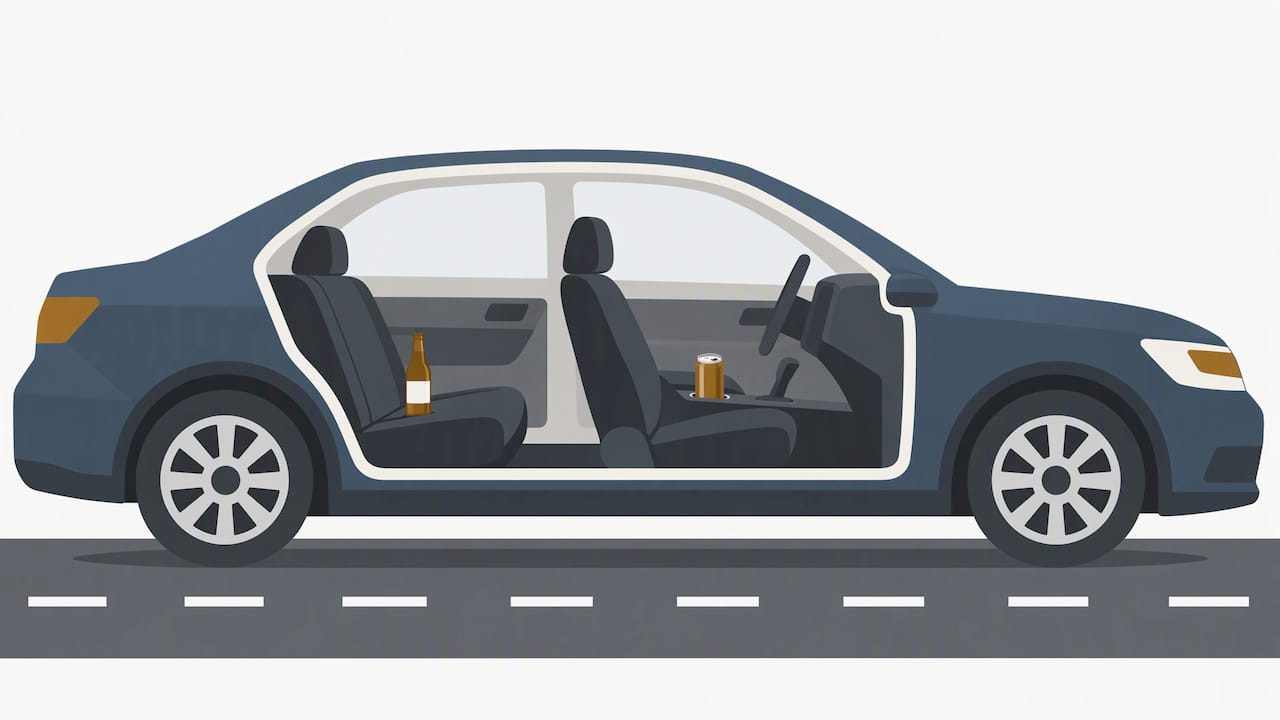
“Open” is broader than most people assume. The statute defines what counts as an open container and a passenger area. Check the statutory language for the definitions that apply to a particular situation.
The statute lists exceptions:
- Passengers in a for-hire vehicle, such as a taxi or limousine
- The living quarters of a motor home or RV
- The area behind the last upright seat in a vehicle without a trunk
- Any area not normally occupied by the driver or passengers, such as a locked trunk
For marijuana, the question often turns on evidence of consumption. Practitioners see motorists misread the “area not normally occupied” exception, as Colorado State Patrol guidance on DUI and impairment notes. The exception only works within the statute’s own definitions.
Where the rules apply: vehicles, public places, and local exceptions
The state statutes govern vehicles on public highways. Rules for public drinking can vary by location. Check the applicable local code before drinking outdoors. Rules vary by location, so this is not a full list, and check your city’s code before you carry a drink outdoors.
Here is how the vehicle exceptions work in practice:
- Trunk: A closed trunk is the cleanest answer. Nobody in the car can reach it while driving.
- No trunk: In an SUV or hatchback, the space behind the last upright seat can qualify, as long as it is not part of the passenger area.
- Area not normally occupied: This is a narrow category. A bag on the back seat or in the footwell is still within the area people occupy, so it does not qualify.
- Licensed common-consumption areas: Events and districts that authorize outdoor drinking set their own boundaries, and stepping outside them can turn a lawful drink into a citation.
Penalties and how open container ties into DUI, DWAI, and DMV action
Having an open container in a vehicle can lead to a citation. A stop may also lead to a DUI or DWAI investigation if the officer suspects impairment. The open container becomes the opening chapter of that investigation.
Colorado’s two impairment thresholds: a blood alcohol content of 0.08% for DUI and 0.05% for DWAI. The popular “2-2-2” drinking rule is not a legal standard here, and impairment depends on many factors.
The legislature’s law summary lays out the permissible inferences at those two levels and explains the persistent drunk driver designation. A first-time DUI is typically a misdemeanor, and a DUI is not automatically a felony. Felony exposure depends on prior convictions or on serious injury or death.
Here is what the DMV side can include:
- An Express Consent Affidavit and Notice of Revocation after a stop, handled through a process separate from criminal court
- License revocation or suspension, points, and fees
- Ignition interlock and SR-22 insurance requirements
- Reinstatement steps and fees, outlined on the DMV reinstatement page
For a fuller breakdown of fines and jail exposure, see our page on Colorado DUI, DWAI, and UDD penalties. The key point: an administrative finding and a court conviction are different things, and each can happen without the other.
If you get cited or arrested: your first steps
After an alcohol or drug driving stop, check the notice promptly for the applicable deadline. Work through these in order:
- Read every paper you were handed. Look for an Express Consent Affidavit or Notice of Revocation. It tells you what the DMV intends to do.
- Calendar the 7-day deadline. You have 7 calendar days to request an Express Consent Hearing. Missing the window forfeits that hearing.
- Request the DMV hearing. Check the notice and official DMV information to learn whether you may drive while the matter is pending and what steps are required.
- Preserve evidence. Photograph where the container was, keep receipts, and write down the names of anyone who was in the car.
- Keep statements short. Give identification and politely decline detailed questions about what you drank or where you were going.
- Call a Colorado DUI or traffic attorney. The DMV matter and the criminal or traffic case need to be coordinated, not handled one at a time.
Pro Tip: Set a reminder well before the deadline. The deadline counts calendar days, and missing it forfeits the hearing.
Our guide on how a DUI lawyer can help walks through what early counsel does in practice.
How to transport alcohol and marijuana without a ticket
To reduce the risk of an open-container ticket, follow these precautions:
- Keep sealed containers unopened and out of reach, ideally in the trunk.
- Store resealed restaurant wine where neither driver nor passengers can readily get to it. The DR 8501 Street Officers’ Guide says exactly this about resealed vinous liquor.
- Check event rules and licensed common-consumption boundaries before you open anything outdoors.
- When in doubt, use the locked trunk or a part of the vehicle nobody normally occupies.
Why timing and a coordinated defense matter
After watching these cases unfold, the pattern is consistent: people treat the ticket as the main event and ignore the DMV letter. They are two cases running on two tracks, and a missed 7-day window can decide the license outcome before the court ever hears a word. Josh McDowell is a former prosecutor who keeps a limited caseload so each client gets personal attention, and the earlier we are involved, the more options stay open.
— Joshua
How we help with open-container tickets, DUI, and license issues
If you are facing an open-container citation or a DUI stop, we handle the whole picture: DUI defense, traffic defense, and preparation for your DMV hearing. Call early and you get timely counsel, a plan for the 7-day deadline, and one attorney coordinating your criminal and administrative cases. Reach out to our Colorado Springs office today to talk through your options.

This article is general information, not a substitute for advice from a qualified lawyer. Consult a qualified legal professional about your own circumstances before acting on anything here.
FAQ
How much can I drink and drive in Colorado?
There is no safe amount. DUI starts at a 0.08% blood alcohol content and DWAI at 0.05%, but impairment varies by person, and you can be charged below those levels if an officer believes you are impaired.
What is the 2-2-2 drinking rule?
It is not a legal standard in Colorado. State Patrol guidance stresses that impairment depends on many factors, so no drink-counting formula protects you.
Is a DUI a felony in Colorado?
Not automatically. A first-time DUI is typically a misdemeanor, and felony exposure depends on prior convictions or on an offense that causes serious injury or death.
Can I drink in public in Colorado?
Generally not outside licensed or authorized areas, though each city sets its own rules. Rules for public drinking vary by location. Check your local code first, and see our Colorado DUI FAQs for related questions.
Sources
- AN ACT
- Alcohol and Drug Related Offenses | Colorado Department of Revenue
- DUI – Don’t Underestimate Impairment | Colorado State Patrol
- [DR 8501 Street Officers’
Guide to Liquor & Tobacco Enforcement in Colorado](https://sbg.colorado.gov/sites/sbg/files/documents/DR8501_Street_Officers_Guide_2026.pdf)
Recommended
- Can I Drive After a DUI in Colorado? – Laws & Restrictions
- Colorado License Reinstatement: Laws & Process
- Colorado Driver License Guide and Resources (Driving Handbook & More)
The post Open Container Laws in Colorado: Request a DMV Hearing Within 7 Days first appeared on McDowell Law Firm.
from McDowell Law Firm https://mcdowellfirm.com/open-container-colorado/
https://mcdowellfirm.com/practice-area/dui-defense/

No comments:
Post a Comment