I understand the court system can be overwhelming. Even something as simple as trying to understand a case number can induce anxiety.
In this Colorado case number guide, we’ll cover case number format and the meaning of each part of the case number. When you know the simple code, the numbers are very easy to understand.
If you are facing criminal charges in Colorado, you’ve probably noticed a confusing string of letters and numbers at the top of your paperwork next to your name.
That’s your case number, and it actually tells you quite a bit about your case if you know how to read it. Understanding this simple code helps you know what type of charge you’re facing and where your case will be heard.
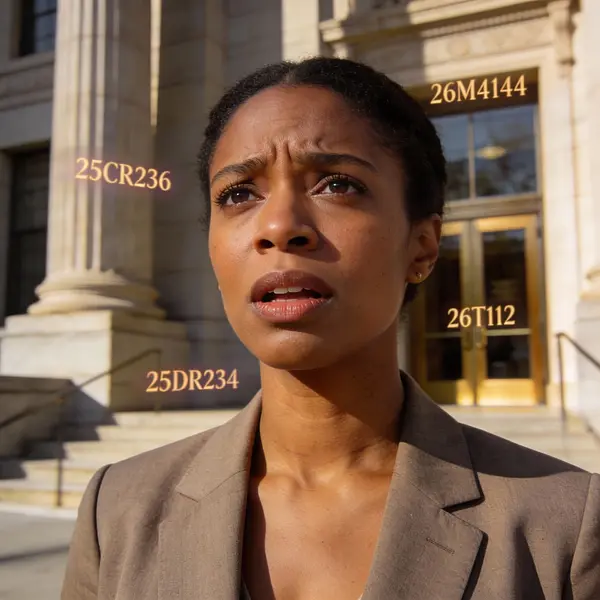
The Basic Format
Colorado case numbers follow a straightforward pattern: Year-Level-Number. The year comes first, followed by a letter code indicating the type of case, and then a sequential number showing when your case was filed that year.
For example, 24CR1 (sometimes written as 2024CR1) means this was the first criminal case filed in that particular court in 2024. The “CR” tells you it’s a criminal case. The “1” tells you it was the first one filed that year.
1. Criminal Case Codes
Criminal cases use different letter codes based on the severity of the charge.
CR – Felony Criminal Cases: These are the most serious criminal charges. If your case number contains “CR,” you’re facing a felony charge that could result in prison time. Examples: 24CR156, 2025CR89.
Example: 26CR324
Year -2026
Level-Felony (CR)
Number-324th filed that year in that court.
- M – Misdemeanor Cases: Misdemeanor charges are less serious than felonies but still criminal offenses. A case numbered 26M543 would be the 543rd misdemeanor filed that year.
- T – Traffic Cases: Traffic violations get their own designation. If you’re fighting a speeding ticket or DUI, you’ll see “T” in your case number. Example: 26T1027.
- R – Infractions: Minor traffic violations and infractions use “R” in the case number. Example: 26R234.
2. Civil and Family Case Codes
Not all case numbers involve criminal charges. Colorado courts handle many types of legal matters.
- CV – Civil Cases: Contract disputes, personal injury lawsuits, property disputes, and other civil litigation use “CV” designation. Example: 26CV2341.
- DR – Domestic Relations: Divorce, child custody, child support, and other family law matters are designated “DR.” The “DR” stands for “domestic relations,” which is the legal term for family court matters. Example: 26DR789.
Why the Case Number Matters
Your case number tells you immediately what you’re dealing with. If you see “CR,” you know you’re facing felony charges. If you see “M,” you’re dealing with a misdemeanor.
The case number also helps you track your case through the system. Courts use these numbers to organize files, schedule hearings, and maintain records.
For example, if Tony received 3 charges in one year, each case will have its own case number. These charges can be dispo’d together (global disposition), or individually.
Where Tony could have domestic violence case dismissed for victim non-cooperation, the DA could still pursue his DUI charges.
The Sequential Number Tells a Story
The number at the end shows how many similar cases were filed before yours that year. A case numbered 2025CR15 means only 14 other felony cases were filed before yours.
A case numbered 2025M2847 means thousands of misdemeanor cases have been filed. This gives you context about how busy the court is. El Paso County typically has the most cases filed every year.
Different Counties, Same System
Every county in Colorado uses this same basic system. Some counties use the full four-digit year (2024CR1), while others use the two-digit year (24CR1).
The core year-level-number format remains consistent statewide. For example, there will be a 26CR1 in Elbert County, El Paso County and Douglas County. This is the first felony filing in that county, that filing year.
What to Do With Your Case Number
Keep your case number handy. You’ll need it every time you interact with the court system. Write it down and have it ready when you call the court clerk or meet with your attorney. This number is the key to accessing information about your case and checking court dates.
Understanding your case number is the first step in understanding your legal situation. That simple code tells you whether you’re facing criminal or civil proceedings, how serious the charges are, and where your case fits in the court system.
When you call an attorney, it is very helpful to them to have the case number to look up the case you are calling about. Sometimes names will be spelled wrong, or you might have a common name. There is only one case with that number in your county, so it can expedite the process of locating a case.
The post How to Read Colorado Court Case Numbers first appeared on McDowell Law Firm.
from McDowell Law Firm https://mcdowellfirm.com/how-to-read-colorado-court-case-numbers/
https://mcdowellfirm.com/practice-area/dui-defense/

No comments:
Post a Comment