My favorite museum in Peru is Lima’s Museum of Gold and Arms of the World. Maybe it’s an odd combination. Upstairs: guns, knives, armor. Downstairs: ancient precious artifacts covering thousands of years of Peruvian History.
The main floor is absolutely packed, floor to ceiling, with samurai swords and armor, WWII memorabilia, elephant guns, ceremonial knives, you name it. It would take hours to appreciate the breadth of the collection.
Heading downstairs, behind a three-foot-thick bank vault, is what I came to see.
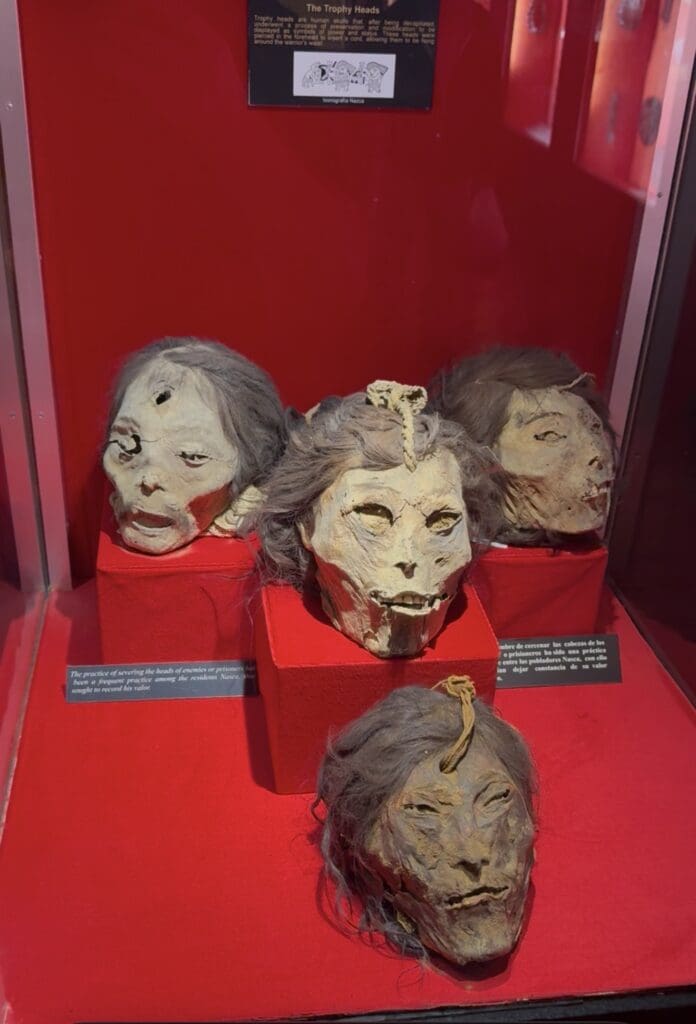
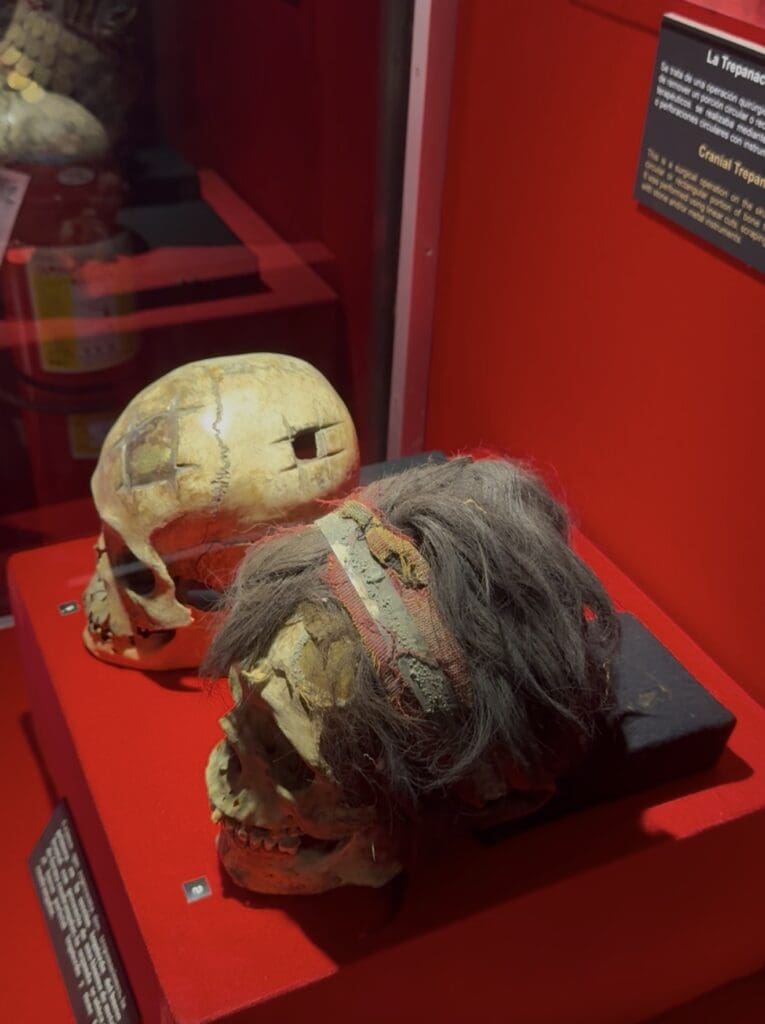
On one side of the display cases sat preserved human heads from 1,500+ years ago. Some had ropes running through holes in the top of the skulls, to be used as trophies to “record the valor” of Nazca warriors. Other skulls showed evidence of trepanation, what the Museum signage describes as ancient “surgical procedures.” There is some debate on the purpose of trepanation in ancient cultures, but evidence suggests many patients(?) survived the procedure, as there are signs of healing around the wounds.
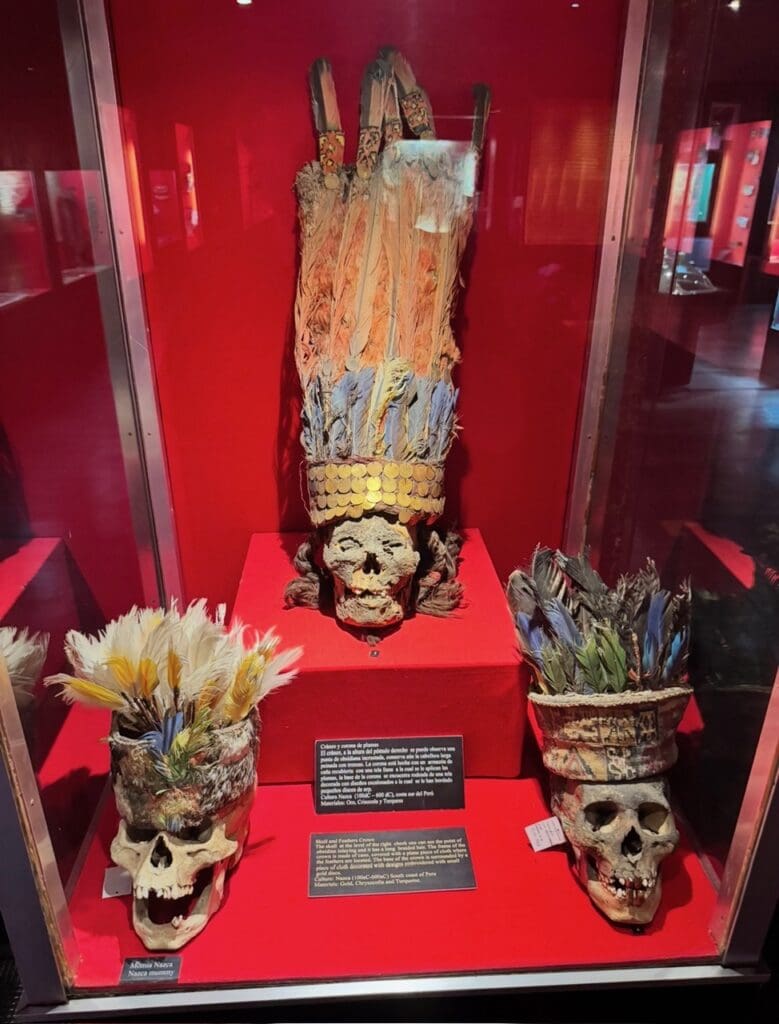
Other skulls had ornate headdresses made of feathers, gold foil and turquoise. These weren’t casualties of war displayed as trophies. The remains were clearly cared for and were likely those of revered members of their people. The juxtaposition was striking. Violence and reverence, all in one display.
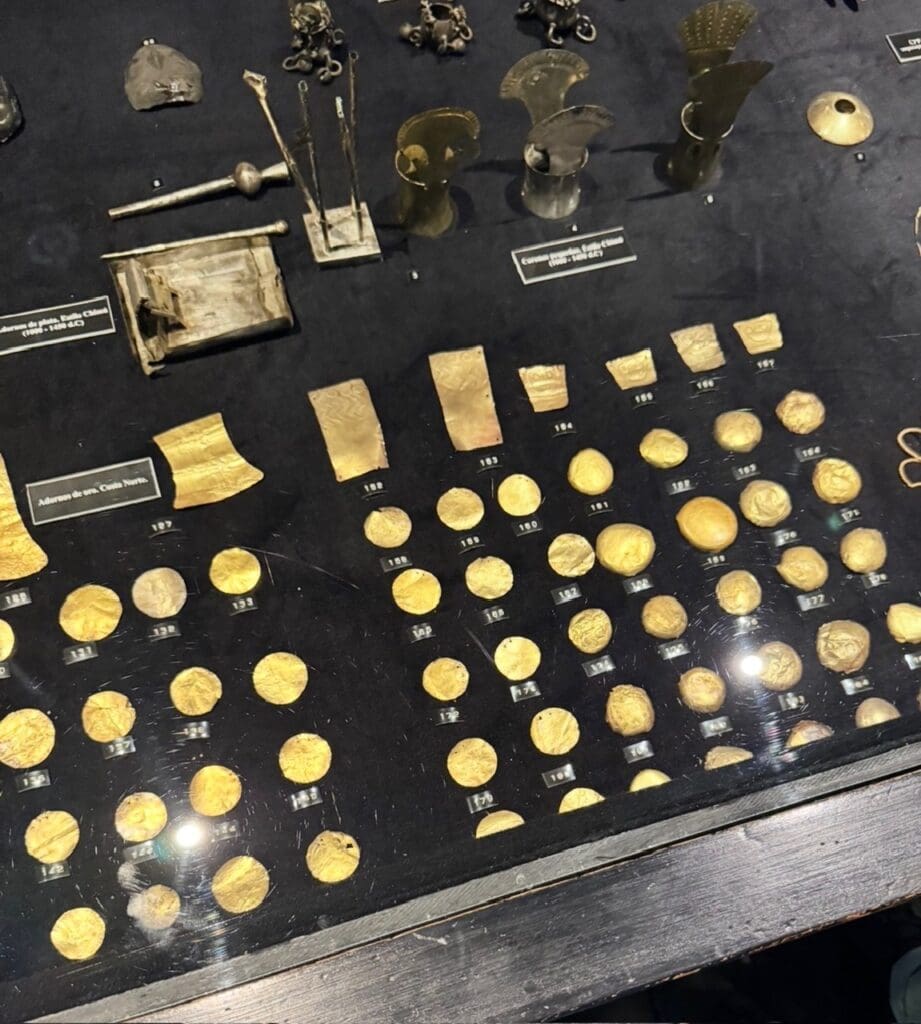
The Museum also displayed hundreds of delicate gold and precious metal ornaments. Thin sheets of hammered gold, bracelets with intricate designs, small discs that once adorned burial shrouds. The Nazca people left us no written records. Everything we know about them comes from what they left behind: lines in the desert, their pottery, textiles, and artifacts of life and death.
What Are Trophy Heads and Why Did the Nazca Take Them?
The Nazca practiced ritual decapitation regularly. A practice that lasted centuries. Archaeological research shows they prepared these severed heads in a very specific way:
- They drilled a hole in the forehead and threaded a carrying rope through it
- They broke open the base of the skull to extract the brain
- They pinned the mouth (and sometimes the eyes) shut with cactus spines
Why go to all this trouble? The heads weren’t just battle souvenirs. They served powerful religious functions.
The Spiritual Power of Severed Heads
Much of this is historical speculation, but I will briefly cover a few common theories below.
Trophy heads appear constantly on their pottery and textiles, usually in the hands of mythical beings or shamans performing ceremonies. Early Nazca pottery even shows the “Sprouting Head” motif where plants grow from severed heads. It has been implied that these offerings were connected to fertility and agricultural renewal.
By sewing the mouth shut, it is believed that they were trapping the spirit of the victim, preventing it from escaping to seek revenge. I have seen these cactus spines used even in the bodies of the Nazca tridactyl mummies.
Who Were the Victims?
Some of the heads turned out to belong to the Nazca’s own people, not foreign enemies.
This suggests to me one of two things: ritual sacrifice or infighting. During times of severe drought or crisis, the Nazca might have ritually sacrificed members of their own group. It could also be the result of neighboring communities fighting over limited resources. Historians believe that changing weather conditions, lack of water, deforestation, and over-cultivation led to the desertification of the Nazca’s home, and their ultimate demise.
Trophy Head Practices
The meaning and use of trophy heads changed over time. Early Nazca society seems to have used them primarily for agricultural rituals. But as centuries passed, the practice took on additional meanings.
Later Nazca art and burials show a shift toward militarism. Trophy heads became status symbols that marked a warrior’s prestige. Successful headhunters were celebrated, their gruesome trophies displayed to enhance their social rank. This is a point I often make: in a culture without a written history, we rely on the physical remains of their culture, and particularly their art, to tell us their story.
Trepanation: Were the Nazca Really Performing Brain Surgery?
The museum’s collection often includes skulls that bear telltale round or square holes of cranial trepanation, an ancient form of skull surgery. The Nazca healers actually demonstrated advanced skill at drilling or cutting into the skull. We know that, because many of their patients lived through the operation. (Many skulls show signs of healed bone growth around the trepanation holes.) The delicate nature of this procedure without anesthesia, antiseptics, antibiotics etc. is remarkable. The Nazca, like the Paracas culture before them, likely used simple tools like obsidian blades or drills made of hollow reeds.
Why were the Nazca Performing Skull Surgery?
Probably to relieve pressure from head wounds. Nazca warriors engaged in frequent combat (as evidenced by all those trophy heads and warfare scenes on pottery). Leading to skull fractures or hematomas from slings and clubs. By carefully removing a section of bone, a Nazca healer could relieve the buildup of pressure on the brain.
Fun fact: Among hundreds of trepanned crania in museum collections, a majority have the hole on the left side of the head.
Why: They were probably getting clubbed on the head by right-handed enemies.
Golden Adornments on the Dead
The Nazca weren’t as advanced in their metalwork as other ancient cultures. The Moche to the north and later the Inca created more elaborate gold work. But the Nazca had a developed craft, and what they created was meaningful.
The Nazca worked primarily with native gold nuggets, which they could hammer directly without advanced smelting. Using stone tools and hammering techniques, they thinned gold into foils, then cut and shaped it into ornaments.
Their techniques included openwork (cut-out designs) and embossing. They created tiny hummingbird shapes, human figures, and feline designs. The gold itself most likely came from alluvial sources, rivers flowing from the Andes. Nazca territory had very few metal ores, but they could pan flakes of gold from streams or obtain gold through trade with highland groups.
Cahuachi was a major Nazca ceremonial center, located about a 45-minute drive west from the city of Nazca. It is believed to be a site of major spiritual significance and a location for pilgrimage for the Nazca people. Of note, archaeologists only found small amounts of gold among offerings in Cahuachi. Absent huaquero looting of gold over centuries (always a problem), it would indicate that gold was relatively rare and reserved for the most important rituals and persons.
High-status Nazca mummies were wrapped in layers of fine textiles and adorned with metallic embellishments. (To date, I have not seen any historical examples of Nazca mummies that were prepared for burial or preserved with diatomaceous earth like the tridactyl mummies.)
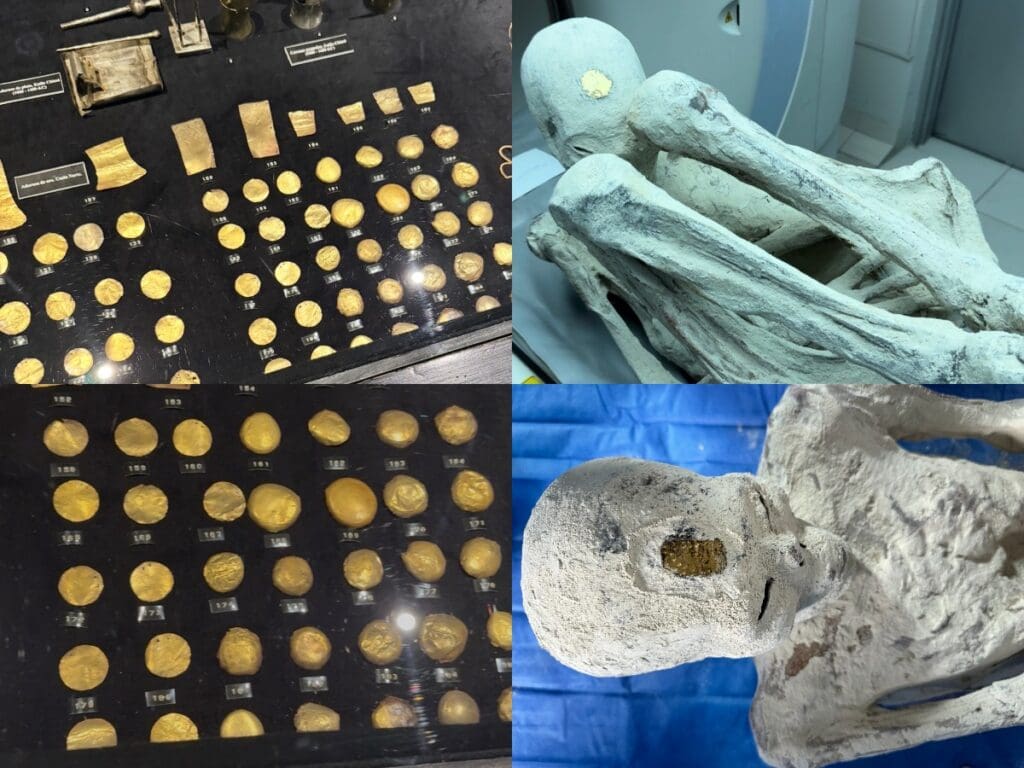
These gold foils and sequins were sewn onto clothes or burial bundles. Many of the tridactyl mummies show very similar gold foil adornments on various parts of their bodies.
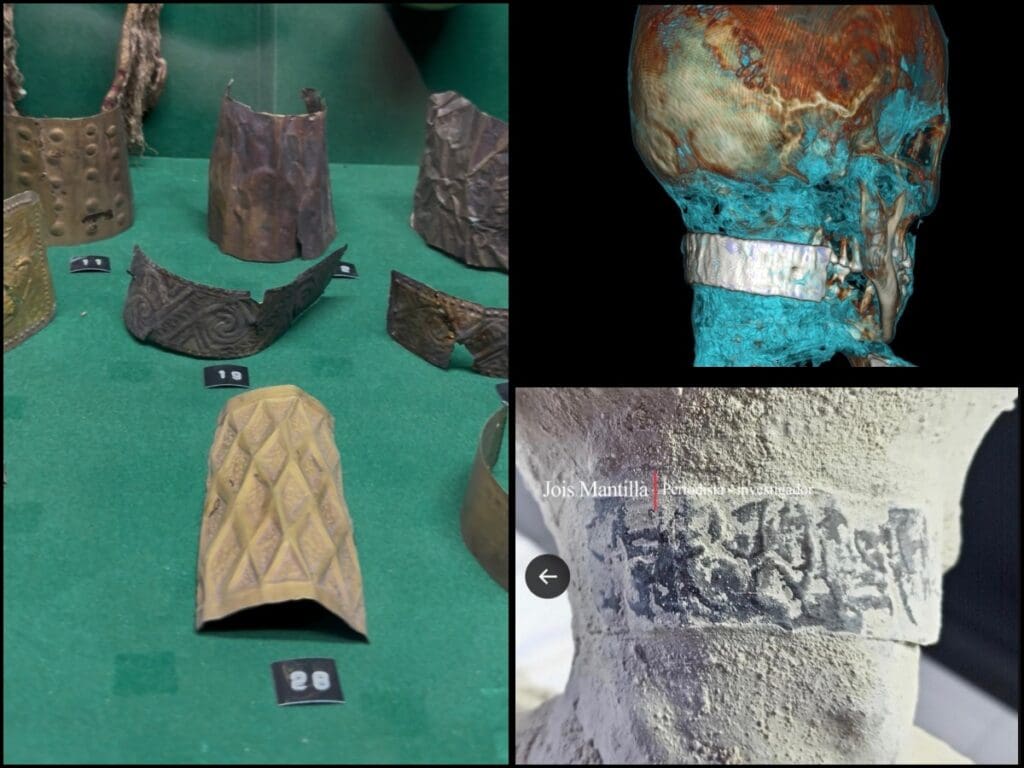
Larger pieces like bracelets and crowns were also part of Nazca burials. One of the bracelets, for example, is a broad cuff with tiny feline figures worked in relief across its surface. The choice of motif is likely significant. The feline was a sacred creature in ancient Peru, associated with power. Other metallic cuffs appear to have simple geometric shapes.
By burying gold with their loved ones, the Nazca perhaps hoped to illuminate their path in the underworld or curry favor with the gods.
Common Nazca Burial Practices
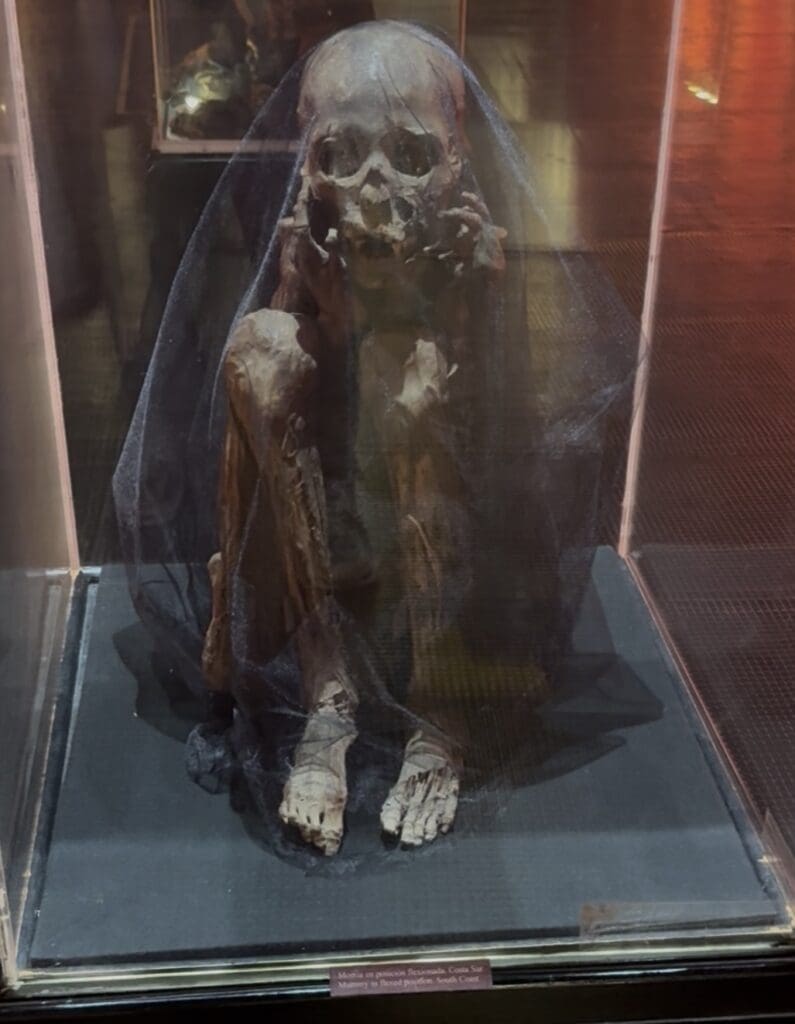
When a Nazca elite died, the send-off was elaborate. Most bodies were wrapped in textile layers and prepared for burial with various items of importance.
The Burial Process
Mummification Bundles: The dead were placed in a fetal position or seated upright, then wrapped in multiple layers of textile to create a tight bundle. This bundle might be painted or adorned on the outside.
Grave Offerings: Buried alongside or within the mummy bundle were ceramic jars and bowls (often painted with Nazca deities or nature symbols) for food and drink, gourd canteens, weapons, and personal items.
Luxury Items for Elites: High-status burials included feather fans or plumes, shell beads, and metal ornaments. Gold nose ornaments, earrings, bracelets, pectorals (chest plates), and even silver items marked the wealthy. Headresses adorned with colorful feathers and gold were also used. (as shown on the heads at the museum.)
Ceremonial Context: Funerals and burials were likely accompanied by religious ceremonies at sites like Cahuachi. The presence of feasting remains, corn beer (chicha) vessels, and evidence of sacrifice indicates that sending off the dead was a community affair.
The Chauchilla Cemetery
Nazca cemeteries like Chauchilla (due south of Nazca) give us a window into these customs. Even today, you can see open tombs at Chauchilla with skeletons or mummies still adorned with fragments of cloth and other objects.
Unfortunately, many tombs were plundered over centuries by looters looking for gold. Because of huaquero (grave-robber) activity, it is difficult to know the condition of these sites as the Nazca left them. The museum’s holdings of Nazca gold are especially valuable because they represent pieces saved from looters and preserved for study.
The Tridactyl Bodies
The Nazca tridactyl bodies are unique in quite a few regards, but for my closing thoughts in this blog, I’ll show some photos of burial adornments. The first thing that needs to be mentioned is the lack of a known burial site for the tridactyl bodies. Because these bodies were not found by archaeologists, the site was not secured for study. In fact, there is no location that has been identified as the true location of their discovery. Obviously, it hinders any scientific/academic study of the area and the hopes of finding additional evidence about their nature, origin, and history. The bodies themselves provide the historical evidence.
The manner in which they were buried/preserved is unlike any other mummies from any other culture or period. Interestingly, the Nazca tridactyls are better preserved than most of the other bodies I’ve seen, including the ones in the museum. So, maybe there is something to this method.
Many of the tridactyl bodies do have gold foil adornments on their bodies. The golden foil discs on the headdresses, and display cases bear a striking resemblance to the golden discs found on the bodies of Montserrat and others. Other tridactyl bodies have what appear to be tumbaga (a golden alloy) and copper adornments.
The mummy “Sebastian” has a grey metal cuff around the back of his neck. The Gold Museum features many bracelets and cuffs that appear similar to Sebastian’s neck adornment. In this image, number 19 appears to be very similar in size to Sebastian’s cuff.
Side Note: If you visit the Museum of Gold, eat next door at Fauna. Get an order of the Focacia. In a city full of great food, it is one of my favorites.
The post Lima’s Museum of Gold (and Arms of the World) first appeared on McDowell Law Firm.
from McDowell Law Firm https://mcdowellfirm.com/limas-museum-of-gold-and-arms-of-the-world/
https://mcdowellfirm.com/practice-area/dui-defense/

No comments:
Post a Comment